Cal Poly Service-Learning Fellows - Sarah Stewart

Sarah Stewart is an Equine Lecturer with a specialization in behavior and training, bringing years of practical experience to both the classroom and the arena. With a diversified background in management, training, and teaching, Sarah is also a member of the Professional Association of Therapeutic Horsemanship (PATH, Intl.) Certified Riding Instructor. In this capacity, she blends practical expertise with an understanding of equine psychology and movement to guide students in applying the principles of adaptive riding techniques while serving members of our local community.
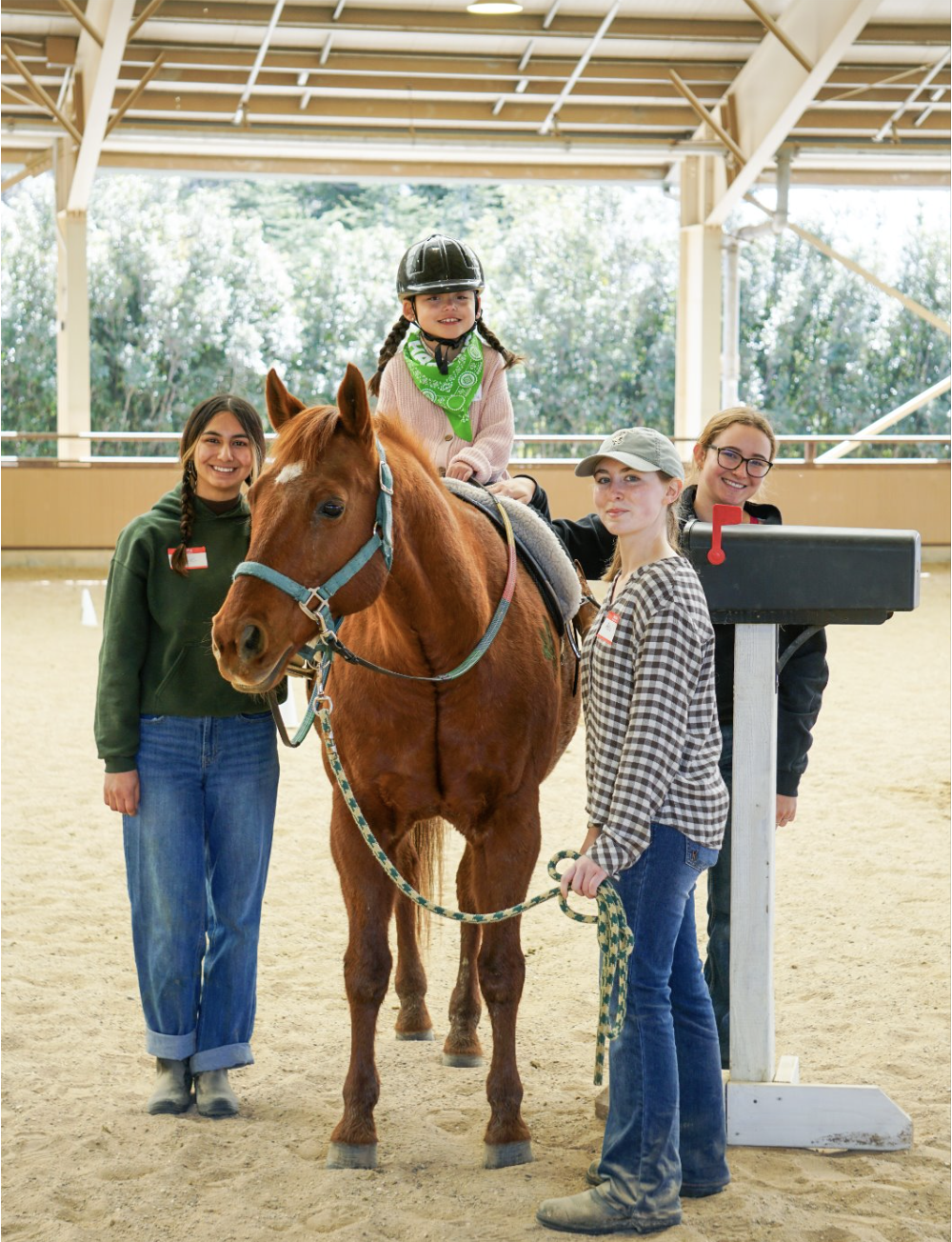
ASCI 490 enterprise, Techniques in Adaptive Riding, focuses on the facilitation of weekly adaptive (therapeutic) riding sessions as a service-learning activity at the Oppenheimer Family Equine Center. Students fulfill specific roles, ensuring the safety of the horse and rider while collaborating with KINE 307 students who will apply the learning components of how to manage and work with individuals with special needs while in this environment. A true learn by doing experience, students gain skills and practice related to general equine management, basic riding principles, knowledge-sharing, and teamwork among various majors while serving a significant role of offering a valuable, inclusive service to a local community group.
Service-Learning in Animal Science
a collaboration between techniques in adaptive riding (asci 490) and adaptive physical activities laboratory (Kine 307)
What is Adaptive Riding?
Adaptive riding/horsemanship is a type of equine- assisted activity that is a non-therapy, skills-based service in which specially trained instructors teach horseback riding and/or horsemanship skills (not specific to riding) to individuals with disabilities.
Adaptive riding offers a comprehensive approach to enhancing various aspects of development, providing individuals a positive and supportive way to build skills and improve well-being. The rhythmic motion of horseback riding helps improve balance, coordination, and motor skills, which can enhance overall physical development. The sensory experience of being around horses also supports sensory integration and regulation, helping individuals become more aware of and manage sensory input. Adaptive riding can foster a sense of confidence, self-esteem, and independence. The bond formed between the rider and the horse provides emotional support and can help reduce anxiety and stress. The structured environment of riding sessions encourages focus, patience, and problem-solving skills.
Hippotherapy (hippo in Greek meaning “horse”) has been used to treat patients with disabilities such as autism, cerebral palsy, multiple sclerosis, traumatic head injury, stroke, spinal cord injury, and behavioral and psychiatric disorders, among others. The present body of literature suggests that equine-assisted activities and therapies can be an effective means of improving many measures of physical and mental health.
ASCI 490/KINE 307 Collaboration
The ASCI 490 enterprise course, Techniques in Adaptive Riding, focuses on the facilitation of weekly adaptive (therapeutic) riding sessions as a service-learning activity at the Cal Poly Oppenheimer Family Equine Center. Trained students fulfill specific roles, ensuring the safety of the horse and rider while collaborating with KINE 307 (Adaptive Physical Activities) students who will apply the learning components of how to manage and work with individuals with disabilities while in this environment. In these sessions, participants will learn the skills of how to ride a horse while engaging in activities that promote physical fitness, balance, coordination, and independence, among others. A true “learn by doing” experience, students gain skills and practice related to general equine management, basic riding principles, knowledge-sharing, and teamwork among various majors while serving a significant role of offering a valuable, inclusive service to local community groups. This program may also serve as an opportunity for future collaborative efforts across the university (PSY and CD majors) in addition to valuable research opportunities.
Service-Learning Experience
As part of the service-learning component of this course, students will engage in hands-on participation during adaptive riding lessons serving select members of the local community in collaboration with students enrolled in a KINE 307 laboratory section. This service-learning opportunity is designed to foster a deeper understanding of equine-assisted practices, provide a much-needed service to the local community and promote community engagement, and enhance students’ knowledge of and experience in inclusive education, physical therapy, and emotional well-being.
Students will assist in riding lessons for individuals with physical, mental, or emotional disabilities. Through this experience, students will gain insight into the therapeutic benefits of equine-assisted activities, the role of the horse, and how instructors and support crew contribute to creating an effective and safe learning environment.
Students are required to complete 10 hours of volunteer service over the quarter by actively participating in equine-assisted sessions offered once weekly at the Cal Poly Oppenheimer Family Equine Center.